
Views: 0 Author: Site Editor Publish Time: 2026-11-16 Origin: Site


Are you losing sales due to rigid checkout processes? Traditional cash registers anchor staff to a single location, creating bottlenecks during peak hours and stifling business growth. A modern mobile payment terminal fundamentally eliminates this friction. It changes how merchants interact with buyers on the floor. This comprehensive guide explores why adopting portable transaction hardware is a critical upgrade for your commercial infrastructure.
Recent financial technology analyses highlight a permanent shift in consumer behavior. Market data indicates that cash transactions are declining rapidly, replaced by a massive surge in contactless and digital wallet payments. Shoppers now prioritize hygiene, speed, and seamless interactions. Consequently, payment hardware has evolved from a simple magnetic stripe reader into a smart, software-driven ecosystem. Businesses failing to deploy agile checkout methods risk losing market share to competitors who offer frictionless omnichannel experiences.
Mobility and Flexibility: Accept payments anywhere, from crowded trade show floors to table-side dining.
Enhanced Customer Experience: Reduce queue times and offer highly convenient checkout options.
Security and Compliance: Modern mobile devices use advanced encryption to protect sensitive financial data.
Cost-Efficiency: Lower overhead compared to bulky, expensive legacy hardware.
Data-Driven Insights: Integrated analytics track sales performance in real-time.
A robust Bluetooth Mastercard 3-in-1 Card Mobile Payment Terminal represents the current benchmark for retail and mobile services. Unlike stationary point-of-sale systems anchored to a checkout counter, this hardware is remarkably compact. It connects seamlessly via Bluetooth or Wi-Fi to sync with your merchant application in milliseconds. Specifically, it bridges the gap between digital and physical commerce by processing transactions exactly where your customers stand. These versatile devices support traditional EMV chip cards, Near Field Communication technology, and popular digital wallets.
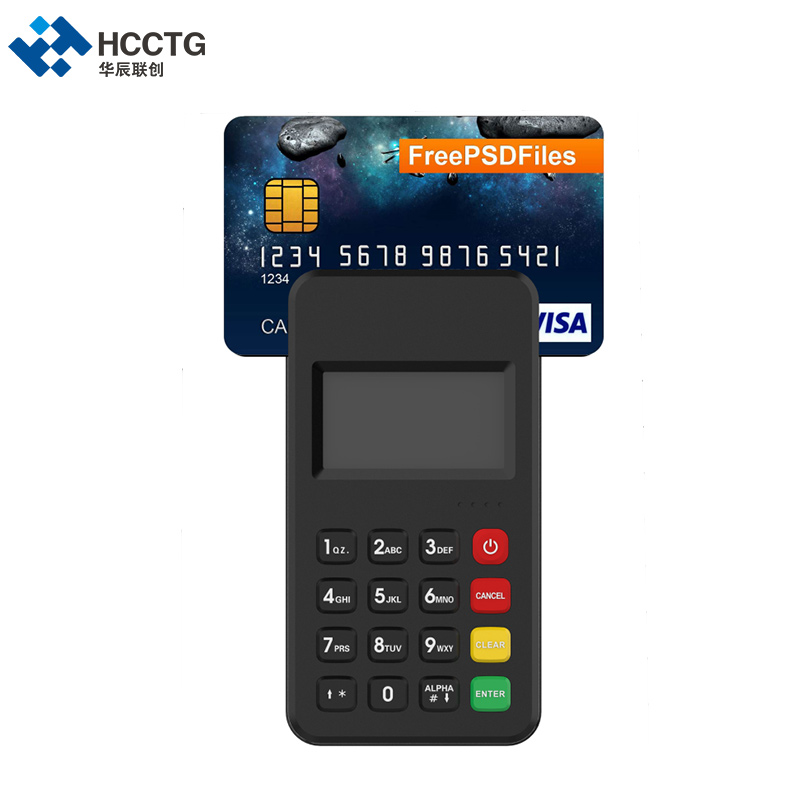
Portability stands out as the most significant engineering advantage for modern merchants. By physically moving the checkout process directly to the consumer, you effectively eliminate frustratingly long lines. Imagine running a busy weekend food truck or a pop-up shop. Instead of tethering your staff to a bulky register and a power outlet, they can roam freely. They take orders and process payments simultaneously. This unhindered movement transforms any location into a potential point of sale.
Environment | Benefit of Mobile Terminals |
|---|---|
Retail Store | Reduce queue wait times during peak holiday hours by deploying floor staff as mobile cashiers. |
Restaurants | Enable table-side payments for faster table turnover and increased tip percentages. |
Delivery Services | Securely accept payments upon order delivery right at the customer doorstep. |
Trade Shows | Process transactions instantly on the event floor without relying on spotty venue infrastructure. |
Modern consumers value efficiency above almost all else. When a shopper is ready to finalize a purchase, they expect a rapid experience without unnecessary delays. Portable payment devices deliver exactly this by supporting lightning-fast contactless methods. Tapping a card shaves crucial seconds off traditional swipe-and-sign routines. Furthermore, facilitating a transaction in a personal, engaged manner helps build inherent trust. Chatting with a diner right at their table while running their card cultivates long-term brand loyalty. A smooth checkout leaves a lasting positive impression.
Security remains the absolute cornerstone of trust within the financial sector. Small enterprise owners frequently worry about devastating data breaches. However, today's mobile processing units are engineered with military-grade security protocols. They deploy End-to-End Encryption to guarantee that sensitive cardholder data is never exposed during network transmission. By utilizing devices that strictly adhere to Payment Card Industry Data Security Standard compliance, you safeguard your business from liability. You meet the rigorous, non-negotiable standards established by global banking networks.
Legacy infrastructure demands significant upfront capital, ongoing maintenance fees, and dedicated counter space. In stark contrast, integrating a modern portable payment terminal offers a remarkably lower barrier to entry. This technology allows growing brands to scale their operational infrastructure without purchasing cumbersome hardware. This inherent scalability means you can effortlessly deploy additional terminals as your transaction volume peaks during busy seasons. Overhead costs remain strictly proportional to actual revenue generation.
In the current data-heavy commercial landscape, a transaction processor is no longer merely a tool for capturing funds. Rather, it functions as a critical node within your broader operational ecosystem. Deploying modern payment hardware essentially means deploying a smart device capable of communicating with various management platforms instantly. This interconnected approach dismantles isolated data silos, minimizes tedious administrative chores, and grants a holistic view of your company financial health.
One of the most profound benefits of upgrading your financial infrastructure is the capacity to synchronize sales data directly with cloud-based accounting platforms. Older cash registers heavily rely on end-of-day manual reconciliation, which is a grueling process highly susceptible to human error. Modern handheld terminals utilize advanced Application Programming Interfaces to automatically push transaction details into your accounting software. For high-volume merchants, this flawless synchronization recovers hours of lost labor every week.
Inventory tracking is another vital domain where mobile integration proves indispensable. The moment a transaction clears, the integrated Point of Sale software instantly deducts the sold item from your digital stockroom. This real-time oversight prevents embarrassing overselling scenarios. It proactively alerts staff when supplies dip below critical thresholds. For boutique retailers, having precise inventory metrics accessible right from the palm of their hand ensures staff can confidently guide customer purchasing decisions.
To truly maximize ecosystem benefits, the physical device must easily accommodate diverse consumer habits. When a single unit accepts magnetic stripes, EMV chips, and tap-to-pay digital wallets, it funnels a much richer dataset into your Customer Relationship Management system. Understanding whether your demographic prefers contactless payments over chip insertions can deeply inform future marketing strategies.
Committing to specific hardware demands a careful, objective evaluation of your unique operational workflows and existing technical framework. The current market is flooded with options, ranging from basic plug-in card readers to sophisticated smart devices. To navigate this landscape successfully and select a reliable mobile payment device, consult the following comprehensive engineering evaluation criteria.
The most crucial element in hardware selection is its ability to converse with your current management software. A terminal is only as effective as the software ecosystem it inhabits. Verify that the device supports your preferred operating systems, be it iOS, Android, or Windows. If your business utilizes bespoke software, ensure the manufacturer supplies accessible Software Development Kits to facilitate custom programming.
True mobility is entirely defined by reliable connectivity. The physical environment where you conduct business dictates your networking requirements. A Bluetooth-enabled terminal provides stable, localized pairing with smart devices, making it exceptionally well-suited for table-side restaurant service. Conversely, cellular-enabled devices equipped with SIM cards are absolutely essential for delivery couriers operating far beyond the reach of local Wi-Fi networks.
A portable device with a depleted battery is functionally useless. When scrutinizing specifications, pay close attention to the milliampere-hour rating. Robust devices should comfortably endure a grueling shift of continuous processing without requiring a mid-day recharge. High-quality lithium-ion batteries ensure consistent voltage output even during peak transaction rushes.
Compromising on security is never an option. The hardware must actively shield consumer data and protect your enterprise from crippling liability. Confirm that the prospective device holds current EMV Level 1 and Level 2 certifications. It must be engineered to thwart physical tampering and logical hacking attempts. End-to-End Encryption is mandatory so that raw credit card numbers are never exposed to your local network.
Feature Category | Key Specification to Look For | Why It Matters for Your Business |
|---|---|---|
Payment Acceptance | 3-in-1 Magstripe, EMV Chip, Near Field Communication | Ensures you never turn away a customer due to incompatible payment methods. |
Connectivity | Bluetooth 4.0 or higher, Wi-Fi, 4G LTE | Determines where and how the device can be used in-store versus on-the-go. |
Security Standards | EMV L1 and L2, PCI-PTS compliance | Protects customer data from interception and ensures strict banking compliance. |
Durability | High drop resistance, robust casing | Reduces hardware replacement costs caused by accidental drops in fast-paced settings. |
Software Integration | Open Application Programming Interface availability | Allows seamless data synchronization with your existing accounting and inventory tools. |
Investing in a mobile payment terminal represents a pivotal step toward modernizing your daily commercial operations. By prioritizing transaction speed, ironclad security, and unhindered portability, you dramatically elevate your operational efficiency. You deliver the frictionless checkout experience modern shoppers demand. Ready to eliminate checkout bottlenecks and secure your revenue? We highly recommend evaluating your specific transaction volume and connectivity needs. From there, you can source industry-leading hardware directly from HCCT to ensure seamless, secure, and rapid payment processing for every customer.
Yes. Most modern terminals utilize industry-standard encryption protocols and are designed to be fully compliant with payment card industry data security standards. When a customer inserts or taps their card, the terminal uses End-to-End Encryption and tokenization. This means the sensitive credit card numbers are instantly scrambled into an unreadable code before being transmitted over the network. Reputable devices are built with tamper-responsive hardware. If someone attempts to physically break into the device, the terminal will automatically wipe its own memory to protect consumer data.
Many modern terminals support short-range Bluetooth or local Wi-Fi to connect to a host smartphone or tablet. For real-time transaction authorization, a stable internet connection is ultimately required by the host device. If you operate in an area with poor connectivity, some systems offer an offline mode feature. This allows the terminal to securely encrypt and store the transaction data locally. Once the device regains internet access, it automatically processes the queued transactions.
Versatile mobile terminals support comprehensive 3-in-1 functionality to accommodate all modern consumer habits. They include a magnetic stripe reader for older traditional cards. They feature an EMV chip slot, which is the global standard for secure payments. Finally, they incorporate Near Field Communication technology. This capability allows the terminal to accept contactless payments from tap-to-pay credit cards as well as digital wallets.
In most cases, yes. The integration capability largely depends on the Point of Sale software that the terminal connects to. Most leading cloud-based terminal solutions offer direct integrations with popular accounting platforms. When a transaction is completed, the software automatically categorizes the sale, calculates applied taxes, and records any tips. This pushes the data directly into your general ledger, making bookkeeping significantly easier.
Yes, modern payment hardware is specifically engineered to handle the daily rigors of fast-paced retail and hospitality environments. While they are designed to be lightweight for portability, the internal components are secured within robust industrial-grade casings. Many devices undergo rigorous drop testing to ensure they can survive falls from standard counter heights onto concrete floors.
Routine maintenance is crucial for optimal performance. You should clean the exterior casing daily using a lightly damp, lint-free cloth. Avoid spraying harsh liquid chemical cleaners directly into the card slots, as this can corrode the sensitive internal reading pins. For the EMV chip slot and magnetic stripe reader, use specialized cleaning cards designed specifically for payment terminals once a week to remove dust and oil buildup.
A standard card reader is typically a basic peripheral device that only captures card data and relies entirely on a connected smartphone or tablet to process the transaction. By contrast, a smart mobile payment terminal is an all-in-one device equipped with its own operating system, dedicated processing chip, and built-in security certifications. Smart terminals can run point-of-sale applications natively, offering a much faster, more secure, and highly independent checkout solution.
