
Views: 0 Author: Site Editor Publish Time: 2026-11-16 Origin: Site


The global retail landscape is undergoing a rapid and permanent shift toward self-service and automated infrastructure. Modern consumers now expect fast, frictionless, and cashless transactions regardless of their physical location. A commuter grabbing a quick snack at a bustling transit station or a driver recharging an electric vehicle on a desolate highway demands instant service. This demand for instant, automated service fundamentally reshapes the payments industry.
Payment Service Providers, or PSPs, constantly search for new sustainable revenue streams and high-volume merchant portfolios to maintain market share. However, many PSPs inadvertently miss out on the massive financial potential of the unattended retail sector. This gap in service often stems from a lack of appropriate hardware partnerships and a misunderstanding of the specialized equipment required for automated environments.
Recent market data points to a structural shift in consumer infrastructure. The self-service sector is expanding at a double-digit compound annual growth rate. Labor shortages across the retail and hospitality sectors accelerate this transition. Merchants are forced to adopt automation to maintain operational hours. Consequently, the transition from legacy closed-loop systems, like proprietary transit cards, to open-loop cashless payments is accelerating. PSPs failing to provide rugged self-service solutions risk losing market share to more agile fintech competitors.
To successfully capture this booming market, PSPs must understand the specific environments where self-service technology thrives. This article breaks down the top use cases and analyzes the consumer behaviors driving this structural trend. It also outlines the essential hardware features required to deploy reliable solutions. Ultimately, specialized self-service payment hardware remains the definitive key to unlocking scalable, long-term growth for modern PSPs.
Massive Market Growth: The exponential demand for cashless self-service solutions is reshaping consumer habits. This offers PSPs a highly scalable avenue for continuous transaction volume.
High-Value Use Cases: Automated vending machines, EV charging stations, municipal parking meters, and self-service kiosks represent the most profitable sectors for deployment.
Essential Hardware Features: Operational success in unattended environments requires ruggedized hardware. Devices must be equipped with IP65 waterproof ratings, Android OS flexibility, and standard MDB protocol support.
Strategic Advantage: Offering purpose-built hardware allows PSPs to clearly differentiate themselves from competitors who only supply traditional countertop or handheld point-of-sale systems.
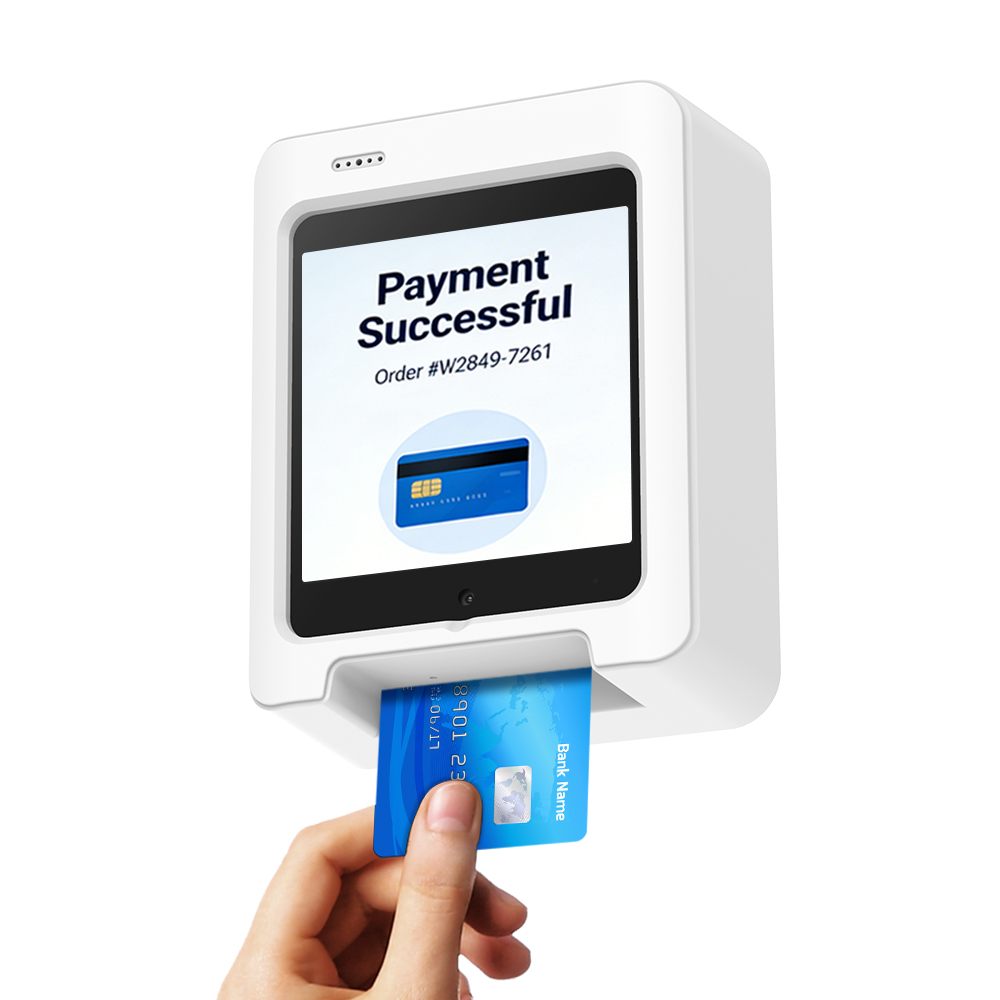
To capitalize on automated retail, it is first necessary to define the core technology. An unattended payment terminal is a secure hardware device engineered to process credit cards, contactless payments, and mobile digital wallets without the need for a human cashier. These devices address the need for cashless processing, consumer convenience, labor reduction, and secure automated data transmission to acquiring banks.
PSPs serve a critical function in this ecosystem. They bridge the technical and financial gap between self-service merchants, such as vending operators or municipal parking authorities, and the acquiring banks that settle the funds. Without a PSP providing the gateway and the hardware, merchants cannot accept digital payments at their automated machines.
In contrast to traditional handheld systems, which require active human operation and limit processing to staffed business hours, automated systems facilitate uninterrupted operations. Unattended setups offer a superior Return on Investment because they run around the clock with zero associated labor overhead.
For PSPs, the business case is highly compelling. Once deployed, these machines process micro-transactions continuously. This significantly increases overall processing volume, maximizes merchant retention through reliable hardware, and establishes predictable recurring revenue.
The rapid adoption of automated systems is heavily driven by fundamental changes in consumer expectations. The industry is witnessing a massive trend toward contactless payments. Near Field Communication, known as NFC, is emerging as the baseline standard for modern transactions. Consumers increasingly prefer not to carry physical cash or even physical credit cards. Instead, they opt for mobile wallets, expecting that payment should require nothing more than a simple tap.
Imagine a commuter rushing to catch a morning train. They do not have the luxury of time to fumble for coins or wait for a cashier to make change. Unattended systems positively impact the consumer experience by drastically reducing transaction friction in these exact scenarios. They eliminate queues, speed up the checkout process to mere seconds, and offer true on-demand availability.
Furthermore, empirical data consistently demonstrates that consumers tend to spend more per transaction when utilizing digital payment methods at a self-service machine. Without the physical limitation of loose change in their pockets, buyers are less constrained by price points. This psychological shift results in higher average ticket sizes. This directly benefits both the merchant and the PSP collecting transaction fees.
To effectively penetrate the automated retail market, PSPs must target specific verticals where self-service hardware provides the highest utility. The following sectors represent the most viable opportunities for deployment.
The vending industry has transitioned rapidly from traditional coin-operated mechanisms to fully cashless smart retail. Modern consumers expect to purchase high-value items, ranging from electronics to fresh salads, via vending machines. For PSPs, capturing this market requires hardware that supports the Multi-Drop Bus protocol. This protocol is the universal standard for vending machine communication. It ensures the payment device can seamlessly instruct the machine to dispense a product only after a transaction is successfully authorized.
The electric vehicle market is experiencing explosive global growth, bringing a corresponding need for public charging infrastructure. EV charging stations present a unique operational challenge. They are typically located outdoors, fully exposed to rain, snow, dust, and extreme temperatures. PSPs targeting this sector must provide a highly durable, outdoor-rated IP65 unattended payment terminal. These devices must process high-value transactions securely while withstanding harsh environmental conditions without succumbing to water ingress or freezing.
Municipalities and private facility operators are aggressively upgrading legacy parking meters and transit kiosks to cashless systems. This prevents theft and reduces collection costs. In these environments, throughput speed is the highest priority. A delay of even a few seconds can cause significant bottlenecks during rush hour. PSPs must deploy terminals with highly optimized NFC processing capabilities to keep vehicle and foot traffic moving efficiently.
Quick-service restaurants and corporate micro-markets utilize automated terminals to bust lines, reduce staff overhead, and improve order accuracy. By allowing customers to input their own orders and pay immediately at a self-service kiosk, restaurants mitigate the chaos of peak lunch hours. This setup also consistently increases the average order value through automated upselling prompts.
High-moisture environments present a unique challenge for electronic hardware. Car washes and laundromats are transitioning to cashless payments to offer subscription services and streamline operations. However, the machines in these locations are constantly exposed to humidity, direct water spray, and chemical detergents. Providing hardware that will not short-circuit in these corrosive conditions gives PSPs a distinct competitive advantage in this lucrative niche.
To support the demanding use cases outlined above, PSPs must carefully evaluate the hardware they offer to merchants. Long-term operational success relies entirely on specific technical specifications that go far beyond standard countertop setups. The table below highlights the critical differences.
Hardware Feature | Standard Countertop POS | Purpose-Built Unattended Terminal |
|---|---|---|
Environmental Protection | None or IP44 rating | IP65 Dust and Waterproof certified |
Vending Integration | Not Supported natively | Native Multi-Drop Bus protocol |
Operating System | Closed Proprietary OS | Flexible Android OS framework |
Connectivity Options | Wi-Fi only | 4G LTE, Wi-Fi, and Bluetooth |
Physical Installation | Desktop or handheld placement | Panel mount for standard machine cutouts |
An IP65 rating is a non-negotiable specification for any device deployed outdoors or in industrial settings. The first digit indicates that the enclosure is completely dust-tight, preventing solid particles from interfering with internal microchips. The second digit signifies robust protection against low-pressure water jets from any direction. Without this rating, terminals deployed at car washes or outdoor parking lots will inevitably suffer from water damage.
As previously noted, the Multi-Drop Bus protocol is the gold standard for automated retail. It is a computer bus design specifically created for vending, allowing the main machine controller to communicate securely with peripheral devices. Hardware that features native integration allows for plug-and-play installation. This drastically reduces deployment time and technical friction for operators who are upgrading legacy machines.
Legacy payment terminals often run on closed, proprietary operating systems that are notoriously difficult to update and customize. Modern solutions utilize Android-based frameworks. An Android system provides immense flexibility, allowing software developers to easily create custom user interfaces, deploy localized payment applications, and integrate complex loyalty programs. This versatility allows PSPs to offer tailored solutions to different merchant verticals using the exact same base hardware.
While the automated retail market is highly lucrative, PSPs must navigate several technical challenges to deploy successful solutions. The primary hurdle is hardware versus software synergy. PSPs frequently face pain points when attempting to integrate modern cloud-based payment gateways with legacy self-service machines. Older vending machines may not supply adequate power or may use outdated serial connections. Selecting a modern terminal with broad compatibility and comprehensive Software Development Kits mitigates these integration bottlenecks.
Security and compliance represent another critical challenge. Because these machines operate without staff supervision, they are prime targets for tampering and skimming. Terminals must adhere to strict PCI-PTS compliance, which stands for Payment Card Industry PIN Transaction Security, and hold valid EMV Level 1 and Level 2 certifications. End-to-end encryption is required to ensure cardholder data is protected from the moment of capture until it reaches the acquiring bank.
Specifically, remote management is essential for operational efficiency. Diagnosing software issues in person across a widely distributed network is cost-prohibitive. PSPs require hardware equipped with Mobile Device Management capabilities. This allows administrators to monitor terminal health, push Over-The-Air software updates, and troubleshoot errors remotely. This proactive approach maximizes machine uptime.
For PSPs seeking a comprehensive hardware solution that addresses these complex industry challenges, the Z80 UPT unattended payment terminal serves as an optimal integration choice. It consolidates durability, standard protocols, and modern operating systems into a single adaptable unit.
Engineered for the field, the Z80 UPT features a compact 4-inch display deliberately designed to fit seamlessly into standard vending machine cutouts. This minimizes physical modification requirements for merchants upgrading from legacy coin acceptors. Operating on an Android framework, the device allows system integrators to utilize standard development tools for custom user interface design.
Furthermore, the terminal is equipped with native Multi-Drop Bus support out of the box, ensuring immediate compatibility with standard vending controllers. Crucially, the ruggedized IP65-rated enclosure provides essential protection against dust and water ingress. It includes comprehensive connectivity options such as 4G LTE, Wi-Fi, and Bluetooth to guarantee signal stability in remote locations. Security is strictly maintained through PCI PTS compliance and EMV Level 1 and Level 2 certifications. This ensures cardholder data remains protected during every micro-transaction.
By partnering with manufacturers to integrate a robust device like the Z80 UPT into their portfolios, PSPs gain a distinct competitive edge. It allows them to approach merchants with a reliable and future-proof hardware solution.
The financial incentive for PSPs to enter the automated sector is supported by strong market projections. As self-service retail expands, PSPs have multiple avenues to monetize this structural trend.
First, the core revenue model relies on transaction fees. Because automated machines operate continuously, they generate a massive volume of micro-transactions. While individual ticket values may be lower in a vending environment, the sheer volume creates a substantial and highly predictable revenue stream.
Second, PSPs can implement Hardware-as-a-Service models. Instead of selling the terminal outright, PSPs can lease the hardware to merchants for a monthly fee. This eliminates the steep upfront capital expenditure for the merchant while providing the PSP with recurring subscription revenue.
Finally, PSPs can offer value-added software services. Modern terminals function as connected devices, gathering valuable telemetry and sales data. PSPs can monetize this capability by providing merchants with access to cloud-based analytics dashboards, real-time inventory tracking, and remote machine monitoring services.
The global shift toward self-service operations is permanent. Consumers demand reliable, cashless payment solutions, and they expect them to function flawlessly regardless of the environment. PSPs that prioritize high-value use cases, such as smart vending, EV charging, and quick-service kiosks, will experience significant portfolio growth and enhanced merchant retention.
However, operational success relies entirely on choosing the right hardware. Payment devices must be exceptionally durable, highly adaptable, and easily integrated into legacy infrastructure. Upgrading your hardware offerings is essential to staying competitive in today’s tech-driven landscape.
System integrators and payment providers should actively explore advanced hardware solutions to meet this demand. Review the technical specifications of industry-leading devices and secure strategic hardware partnerships. Visit HCCT to find the exact unattended payment terminal that fits your automated retail deployment needs today.
An unattended payment terminal is a secure, self-service card reader and processing device used in environments without a human cashier. Common locations include smart vending machines, digital kiosks, and municipal parking meters. They are engineered to accept contactless, chip, and swipe payments automatically and securely.
This protocol is the universal communication standard used within the automated vending industry. A payment device with native support can seamlessly communicate with the vending machine internal controller to dispense products accurately and report real-time sales data without complex integration hurdles.
An IP65 rating certifies that the device is fully protected against dust ingress and can withstand low-pressure water jets from any direction. This ruggedized durability makes it absolutely essential for outdoor use cases, such as EV charging stations, or high-moisture environments like commercial car washes.
Modern terminals utilize multiple connectivity options to ensure high uptime. They typically feature built-in 4G LTE modules for cellular networks, which is crucial for remote locations like highway rest stops. They also support Wi-Fi and Bluetooth for localized network setups.
Yes. Purpose-built hardware adheres to strict Payment Card Industry PIN Transaction Security standards. They feature tamper-responsive mechanisms that erase sensitive data if the enclosure is breached, alongside end-to-end encryption to protect cardholder information from the point of interaction to the acquiring bank.
