
Views: 0 Author: Site Editor Publish Time: 2026-11-16 Origin: Site


Are long checkout lines hurting your daily store sales? Modern retail environments are frequently characterized by high foot traffic, rapid transaction paces, and the constant pressure to maintain operational efficiency. For merchants, busy store environments present significant logistical challenges. Compounding this issue is the anxiety associated with unverified digital payments. When cashiers must rely on visual confirmation from a customer’s personal device, the risk of fraudulent transactions and operational bottlenecks increases substantially.
To address these vulnerabilities, the payment hardware industry introduced a specialized solution often described as the "Soundbox Sentinel." This concept refers to the deployment of dedicated audio payment confirmations that have fundamentally optimized the checkout experience. By acting as a vigilant guard against payment fraud and missed transactions, these devices provide immediate, auditory proof of payment success.
For modern merchants seeking to secure their revenue streams while accelerating checkout times, deploying a reliable Soundbox Payment Terminal has emerged as a highly effective operational strategy. This comprehensive guide explores how dynamic cloud QR technology is transforming business operations and provides a framework for selecting the optimal hardware for your commercial environment.
Instant Verification: Real-time audio alerts eliminate the need for merchants to constantly check their smartphones or wait for delayed SMS confirmations during peak hours.
Dynamic QR Technology: Modern terminals generate transaction-specific QR codes on built-in digital screens, significantly mitigating the security risks associated with static printed codes.
Enhanced Security: Hardware innovations, including integrated PIN pads and encrypted cloud connectivity, protect both the business and the consumer from sophisticated payment fraud.
Seamless Connectivity: Dual 4G and Wi-Fi capabilities ensure uninterrupted operations, maintaining transaction flow even in high-traffic or remote retail environments.
Bottom-Line Impact: Expedited checkout processes and reduced fraud instances directly correlate with improved operational efficiency and sustained revenue protection.
At its core, a Soundbox Payment Terminal is a standalone Internet of Things (IoT) device engineered specifically for retail environments. Its primary function is to announce successful payment transactions via a high-decibel audio speaker while simultaneously displaying the exact payment details on an integrated screen. Unlike traditional Point of Sale systems that require complex setups, this device connects directly to payment gateways via cellular or wireless networks.
The operational mechanics are straightforward yet robust. When a customer completes a transaction by scanning a QR code, the cloud server instantly transmits a confirmation signal to the device. The terminal then acts as a sentinel, broadcasting an immediate, audible confirmation of the received amount. This process removes the ambiguity inherent in manual verification methods.
The rapid adoption of digital wallets and mobile payments has introduced significant friction at the physical checkout counter. Traditionally, merchants relied on visual confirmation from a customer's smartphone screen or waited for a notification on their own devices. This process is inherently flawed. Network latency often delays SMS or app notifications, causing awkward pauses at the register. Furthermore, malicious actors exploit this system by utilizing fake payment applications or presenting manipulated screenshots of previous transactions. For a busy cashier trying to clear a holiday queue, verifying the authenticity of a digital receipt on a cracked phone screen under pressure is difficult, often leading to financial losses and inventory shrinkage.
In addition to these local challenges, global retail trends show a marked shift toward secure, automated O2O (Online-to-Offline) verification. As cash reliance decreases, the industry is moving away from passive verification toward active, hardware-based confirmation. This transition reflects a broader market demand for hardware that ensures total transaction integrity without imposing extra steps on the customer.
The trajectory of retail payment verification has undergone a rapid technological evolution. Initially, merchants relied on simple, static QR codes printed on paper or acrylic stands. While cost-effective, these provided zero feedback, requiring manual intervention. The first iteration of the soundbox was essentially a basic speaker linked to a merchant's account, designed solely to emit a generic chime. These early models lacked visual interfaces and relied heavily on legacy networks, which were highly prone to latency.
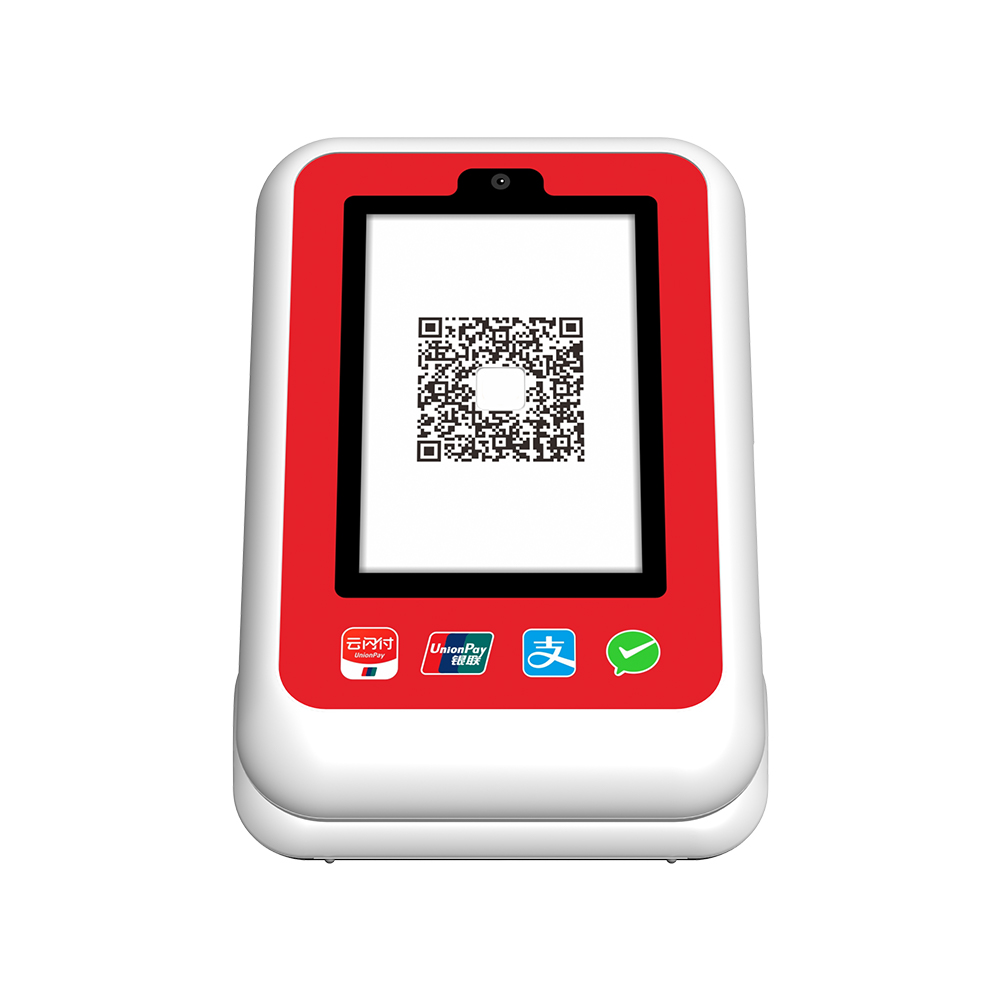
As digital payments matured, the limitations of static audio boxes became glaringly apparent. The industry witnessed a critical shift toward smart, cloud-integrated terminals. The most significant leap was the transition from static printed stickers to dynamic digital screens. Instead of a customer scanning a fixed code and manually typing in the purchase amount—a process susceptible to human error—modern devices generate a unique, single-use QR code for every individual transaction. This dynamic code embeds the exact payment amount and the specific transaction ID, ensuring absolute precision.
Furthermore, the modern iteration of these devices has transformed them into comprehensive, lightweight POS solutions. The integration of specialized hardware components has expanded their utility far beyond simple audio alerts. Devices now frequently feature LCD screens, allowing customers to visually confirm the amount before scanning. By incorporating elements like a physical keypad, these terminals enable secure secondary authentication for high-value transactions or allow cashiers to manually input amounts directly on the device.
Evaluating the technical specifications of a modern terminal is crucial for understanding its impact on retail operations. Advanced models consolidate multiple technologies into a single, compact footprint designed for extreme durability and speed.
A 2.4-inch dynamic QR screen is a fundamental requirement for secure mobile transactions. This size provides optimal visibility for smartphone cameras to scan codes quickly, even under harsh overhead store lighting. More importantly, this dynamic screen prevents customers from altering payment amounts. Because a high-quality terminal generates a distinct QR code that already includes the exact total, the customer only needs to authorize the payment on their phone. This feature alone eradicates the common issue of customers accidentally transferring incorrect amounts.
Continuous internet access serves as the backbone of cloud-based payment processing. Relying solely on a merchant's personal mobile phone hotspot or an unstable store Wi-Fi network introduces unacceptable vulnerabilities. Modern terminals are equipped with dual connectivity options, typically utilizing 4G LTE cellular modules alongside Wi-Fi capabilities. A robust 4G connection ensures that the terminal communicates directly with the payment gateway's cloud servers in real-time. This independent connectivity means the device remains operational even if the local broadband fails.
Security protocols often require additional verification for specific transaction types. An integrated PIN pad elevates the device from a passive receiver to an active transactional tool. It allows cashiers to manually enter transaction amounts directly into the terminal, generating the corresponding dynamic QR code instantly. Specifically, for regions or payment methods that require customer PIN entry, the physical keypad provides a secure, PCI-compliant interface.
The effectiveness of an audio terminal relies entirely on its acoustic performance. In bustling environments such as the sizzle of a commercial kitchen or the chatter of a crowded market, a standard speaker is vastly insufficient. Commercial-grade terminals are engineered with high-fidelity, high-decibel speakers designed to cut through thick ambient background noise. The audio output is calibrated to deliver clear, synthesized voice prompts that articulate the exact currency and amount received.
Selecting the appropriate hardware requires analyzing your specific operational environment. Not all terminals are built to identical specifications, and choosing the wrong model can lead to connectivity issues or hardware failure.
Assessing your connectivity needs is the first step. For stable, indoor retail shops with robust broadband infrastructure, a Wi-Fi-only model may suffice. However, for most businesses, cellular connectivity is highly recommended. A 4G-enabled model provides critical redundancy. It is absolutely essential for outdoor vendors, delivery services, and mobile businesses that operate outside the range of traditional wireless networks.
Evaluating screen size and display quality is equally important. The display must be functional under various lighting conditions. A screen size of at least 2.4 inches is the industry standard for ensuring that the generated QR code is large enough to be easily focused on by a wide variety of smartphone cameras. Additionally, the screen should utilize technology with adjustable brightness to prevent glare from direct sunlight.
Power reliability remains a crucial factor. While fixed retail counters can keep the device plugged in, sudden power outages can halt digital sales. Evaluating the internal battery capacity is vital for long-term reliability. Devices equipped with high-capacity lithium-ion batteries can operate for 12 to 24 hours on a single charge. This portability is indispensable for market stalls, pop-up kiosks, and emergency backup scenarios.
Finally, consider software and cloud integration. Hardware is only as effective as the software powering it. Merchants must ensure that the chosen terminal supports seamless API integration with their specific payment processors, digital wallets, or acquiring banks. Proper integration ensures that transaction data flows accurately into the merchant's existing accounting and inventory management systems without requiring manual data entry.
Implementing dedicated audio verification hardware yields measurable improvements in daily business operations, directly impacting both security and overall efficiency. The primary advantage is the total elimination of visual verification fraud. Scammers frequently use modified applications that mimic successful payment screens to deceive busy cashiers. By establishing the audio alert as the ultimate source of truth, visual evidence becomes irrelevant. If the device does not announce the payment, the transaction is incomplete, regardless of what the customer's phone displays.
In addition to security, throughput is a critical metric in retail. Traditional verification requires the cashier to pause, look at a screen, and manually confirm the data. In contrast, audio feedback allows for parallel processing. The cashier can begin bagging items or greeting the next customer while the buyer completes the scan. The instant the audio confirmation triggers, the transaction is finalized. This reduction in average handle time significantly decreases queue lengths during peak operating hours.
Furthermore, deploying a standalone terminal empowers staff. In many enterprises, the payment receiving account is tied directly to the store owner's personal device. This creates a severe bottleneck when the owner is off-site, as staff cannot independently verify incoming digital payments. A standalone terminal democratizes verification; shift workers and cashiers receive immediate, localized confirmation without needing to access sensitive backend accounting software. This professionalization of the storefront also influences consumer trust, as modern hardware signals that the merchant invests in secure, up-to-date technology.
No, modern 4G soundbox payment terminals operate entirely independently via direct cloud connectivity. They contain their own processing units and network modules, requiring no secondary smartphone or tablet to process, verify, or announce transactions.
It is an advanced payment terminal equipped with a digital screen that generates a unique, single-use QR code for each specific transaction. This dynamic generation embeds the exact payment amount into the code, offering significantly higher security than static, printed QR codes.
An integrated PIN pad allows for the secure, encrypted entry of customer PINs. This is particularly necessary for high-value transactions that trigger secondary authentication protocols, adding a robust layer of hardware-level encryption and fraud prevention to the checkout process.
Yes. Commercial-grade soundbox payment terminals are specifically engineered with high-decibel, high-fidelity speakers. These acoustic components are designed to cut through heavy ambient noise, ensuring alerts are clearly heard in busy environments like food courts and supermarkets.
Most high-quality, enterprise-grade terminals come equipped with built-in rechargeable lithium-ion batteries and 4G SIM card slots. This dual-redundancy allows them to function seamlessly and process payments even when local wall power or Wi-Fi networks fail.
