
Views: 0 Author: Site Editor Publish Time: 2026-06-13 Origin: Site


Operating costs are rising steadily across all commercial sectors. Consumer expectations for frictionless service constantly evolve. This forces a massive operational shift. Businesses must drastically rethink how they process everyday transactions. Modern buyers expect rapid, independent checkout options at any hour. Deploying automated hardware is no longer just a novelty reserved for remote locations. It serves as a strict requirement for modern retail. You need this technology to scale operations effectively. Doing so lets you expand revenue channels without hiring more staff.
However, not every hardware solution fits every environment seamlessly. Evaluating the right technology requires careful attention. You must look past shiny vendor promises. It helps to fully understand environmental durability. You must also grasp API integration capabilities. Compliance realities dictate success in your specific sector. Below, we explore the industries maximizing their returns using self-serve tech. You will learn how to select robust devices. We will also show you how to implement them smoothly to boost profitability.
Unattended payment solutions drive direct ROI by enabling 24/7 revenue capture and reducing dependency on front-line labor.
The most profitable deployments occur in Retail/Micro-markets, EV Charging, Parking, Vending, and QSR/Hospitality.
Successful implementation requires prioritizing PCI-PTS compliance, offline processing capabilities, and hardware durability (IP/IK ratings) over baseline transaction fees.
Mitigating rollout risks demands a clear assessment of legacy machine compatibility and network connectivity before procurement.
Labor shortages put massive pressure on operating margins today. Standard operating hours create a hard ceiling on revenue generation. You simply cannot sell products if no one is there to process the sale. This physical bottleneck cripples growth potential. Shifting toward automated payments solves this core issue. It transforms a labor-dependent model into scalable, self-serve commerce. Customers complete their own transactions quickly. They do not wait in long queues.
Let us look at the long-term operational savings. Manned POS stations require constant staffing. You must cover hourly wages, shift breaks, and ongoing training. Automated kiosks eliminate these recurring labor burdens entirely. Upfront hardware costs do exist initially. Maintenance requires a predictable annual budget. However, the resulting labor savings heavily outweigh these expenses over time. Terminals operate continuously. They capture late-night sales seamlessly. This persistent availability fundamentally improves your bottom line. We see operators rapidly adopting these systems to maintain profitability.
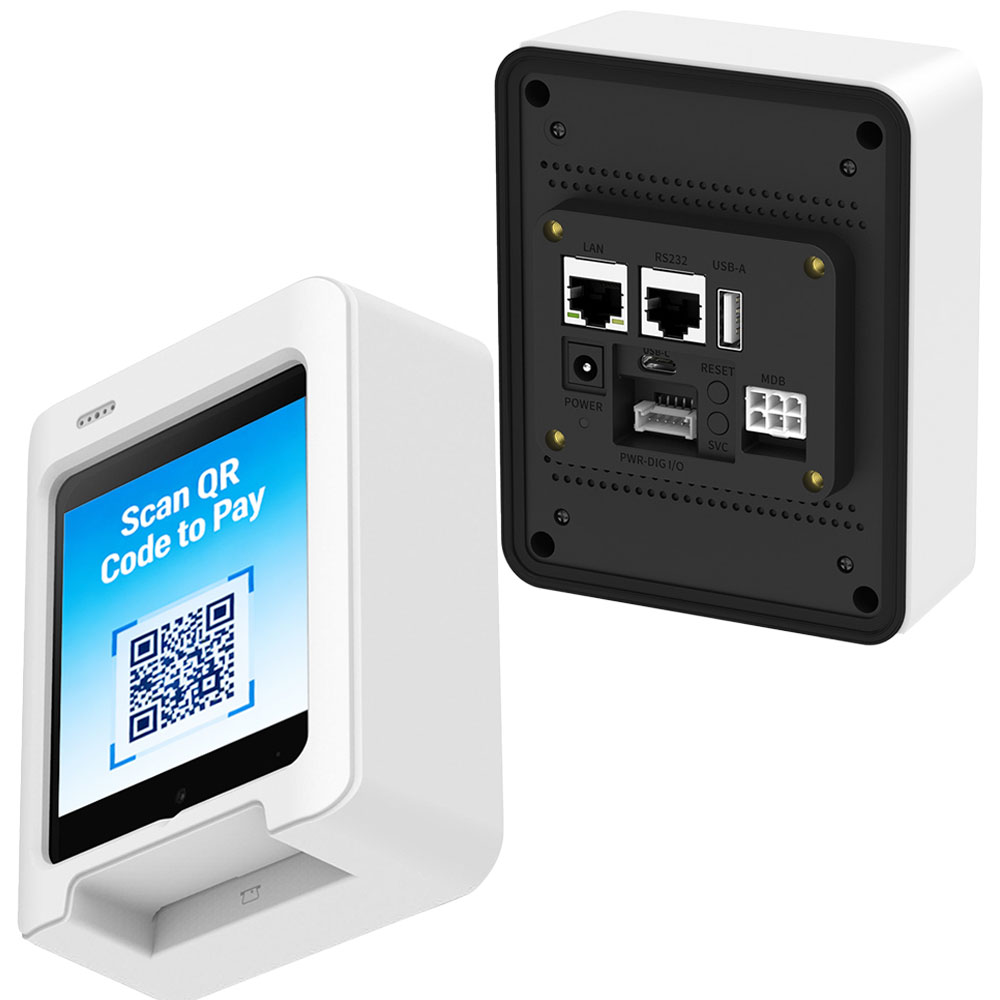
The Problem: Localized retail faces extremely high shrinkage rates. Staffing costs often exceed the profit generated by low-ticket items. Micro-markets cannot afford full-time cashiers.
The Solution: Businesses deploy kiosk-based modules inside corporate offices. These units incorporate a robust Unattended Payment Terminal. Such systems readily support biometric logins. They process mobile wallets and handle loyalty integrations smoothly.
Success Criteria: Achieving seamless API integration matters immensely here. You must connect inventory management systems via telemetry. This allows the terminal to trigger automated restocking alerts. Operators monitor stock levels remotely. They avoid empty shelves and maximize daily sales volume.
The Problem: Drivers face highly fragmented user experiences currently. Many stations force users to download proprietary apps. Furthermore, chargers sit exposed to extreme weather conditions year-round.
The Solution: Open-loop payment systems provide the best remedy. They accept standard credit cards natively at the charger. Drivers simply tap their card or phone. They bypass cumbersome app registrations completely.
Success Criteria: Weather resistance remains absolutely non-negotiable. Hardware must possess IP-65 or higher ratings. Anti-vandalism features protect the screen and card reader. Offline-capable authorization handles transactions safely in remote areas. This ensures drivers never get stranded due to poor cellular network signals.
The Problem: Peak rush hours create massive throughput bottlenecks. Cash and coin-operated ticketing machines demand high maintenance. Collecting coins requires specialized, expensive logistics.
The Solution: Operators install fast-tap, contactless-first readers. Technicians integrate them directly into boom gates and ticketing kiosks. Commuters tap their card without stopping.
Success Criteria: Sub-second transaction speeds prevent traffic backups. The hardware must handle pre-authorizations smoothly. It also needs to support complex transit protocols natively. Rapid processing ensures high commuter satisfaction. It drastically lowers physical maintenance needs across the transit network.
The Problem: Legacy cash-only machines suffer from stagnant revenue. Younger consumers rarely carry physical currency today. Cash-handling procedures consume operator time. Reconciliation tasks drain valuable business resources.
The Solution: Operators actively retrofit these older machines. They install compact, MDB-compliant hardware. Using a modern Unattended Payment Terminal modernizes the entire experience. It accepts cards and mobile payments instantly.
Success Criteria: Plug-and-play compatibility defines a successful rollout. The device must connect to older hardware architectures effortlessly. It relies on standard multi-drop bus (MDB) communication protocols. This keeps retrofit costs highly predictable.
The Problem: Long queue times drive hungry customers away. Line abandonment hurts daily revenue heavily. Order inaccuracy during peak rushes ruins the dining experience.
The Solution: Restaurants deploy intuitive self-ordering kiosks. These kiosks feature ruggedized payment readers. Guests browse menus and customize orders at their own pace.
Success Criteria: The software must sync seamlessly to the Kitchen Display System (KDS). Robust tokenization secures customer payment data. This securely links transactions to digital loyalty programs. Diners earn points without taking any extra steps.
You cannot accept vague "weatherproof" claims from manufacturers. Evaluating devices requires strict adherence to industry standards. Look for verified benchmark ratings.
Hardware Durability & Environment: Ingress Protection (IP) ratings measure resistance to dust and water. Impact Protection (IK) ratings measure physical toughness against vandalism. Understanding these metrics prevents costly hardware failures down the road. We strongly recommend comparing models using these standardized metrics.
Rating Category | Standard Requirement | Ideal Use Case |
|---|---|---|
IP65 Minimum | Complete dust protection, resists low-pressure water jets. | Outdoor EV chargers, transit gates, car washes. |
IK08 or IK09 | Protects against 5 to 10 joules of impact. | Public parking meters, vending machines. |
Wide Temperature Range | Operates between -20°C and +70°C. | Any unheated outdoor kiosk deployment. |
Security & Compliance: You must prioritize strict data protection. PCI-PTS (PIN Transaction Security) certification remains strictly non-negotiable. It protects the physical device against internal tampering. Furthermore, you need P2PE (Point-to-Point Encryption). P2PE encrypts data the moment a card touches the reader. This minimizes the merchant's overall PCI compliance scope. It drastically reduces your annual audit burdens.
Connectivity & Redundancy: Assess the terminal's ability to maintain constant operations. Network outages halt revenue immediately. Evaluate units offering multi-carrier SIM options. Ask vendors about LAN and Wi-Fi fallback mechanisms. You also want robust "Store and Forward" capabilities. This offline mode saves encrypted transactions locally. It processes them automatically once the network returns.
Planning a deployment looks simple on paper. Reality presents unique technical hurdles. You must anticipate these challenges to protect your investment.
Network Dead Zones: Acknowledge the physical limitations of your deployment sites. Underground parking garages notoriously block cellular signals. Remote EV chargers often suffer from poor connectivity. Conduct thorough site surveys prior to any hardware commitment. Map out network strength across all planned locations. You might need to install dedicated network boosters.
Integration Friction: Merging closed-loop proprietary software poses major challenges. Connecting it to a new open-loop gateway often causes friction. Proprietary systems typically resist outside hardware integrations. Emphasize the urgent need for vendor-agnostic SDKs and APIs. Open architecture prevents vendor lock-in. It gives you the freedom to switch processors later. Ensure your developers review the API documentation early.
Vandalism & Maintenance: You must transparently address hardware degradation. Public environments inevitably lead to occasional physical damage. Advise your financial team to plan for a 3-5% annual replacement rate. This covers high-risk public areas effectively. Utilize remote diagnostic tools aggressively. These tools monitor device health constantly. They minimize expensive physical truck rolls.
Best Practices for Rollout: Always test hardware in extreme local weather conditions before scaling. Ensure maintenance crews receive dedicated training on basic terminal reboots.
Common Mistakes: Ignoring MDB protocol variations causes severe connection issues. Failing to map local network dead zones leads to offline terminals.
You need a structured approach to narrow down your options. Use a proven methodology to eliminate incompatible vendors quickly. This protects your budget and your timeline.
Actionable Logic:
Verify legacy hardware compatibility carefully. Test MDB, pulse, or RS232 connections physically. Do not rely solely on spec sheets.
Audit the processor’s specific gateway fees. Compare them directly against gateway-agnostic hardware models. Lock-in contracts often hide high long-term fees.
Request a targeted pilot program. Run a strict Proof of Concept using 5-10 terminals. Do this before authorizing a massive fleet-wide rollout.
Vendor Interrogation: Sales representatives paint overly optimistic pictures. Buyers should ask hard questions before signing any contracts. Use these inquiries to test true vendor readiness:
"What happens to terminal functionality if your primary gateway goes down for four hours?"
"How exactly does your hardware handle offline pre-authorizations?"
"Do you enforce a mandatory hardware upgrade cycle every three years?"
"What diagnostic data can we access remotely without rolling a truck?"
Deploying automated checkout hardware represents a massive operational upgrade. It functions as much more than just a payment facilitator. It fundamentally alters your labor requirements. Customers enjoy faster service. Your business captures sales continuously.
Careful alignment of hardware specs ensures long-term success. Matching devices perfectly to specific industry environments makes a huge difference. It separates a high-ROI deployment from a constant maintenance nightmare. Focus deeply on weatherproofing, offline capabilities, and open architecture. These elements dictate your ultimate profitability.
Take the time to audit your exact integration needs today. Contact a specialized implementation partner to map out your infrastructure. Download a technical spec sheet to start your hardware evaluation immediately.
A: A standard POS requires a clerk to facilitate the transaction. An unattended terminal operates completely independently. It features ruggedized builds to survive outdoor elements. It requires specialized security certifications like PCI-PTS to prevent physical tampering. Unattended units also use specific communication protocols, such as MDB, to integrate directly into self-service machines.
A: Yes. Many modern units feature "Store and Forward" offline functionality. The terminal encrypts and stores the payment data locally during an outage. It forwards the batch for processing once connectivity returns. However, operators must accept the associated chargeback risks, as offline pre-authorizations cannot guarantee sufficient funds immediately.
A: Absolutely. Modern units universally support NFC technology. They accept Apple Pay, Google Pay, and standard contactless credit cards. This tap-to-pay capability remains essential for driving consumer adoption. Customers expect fast, frictionless payments in today's post-cash landscape.
